
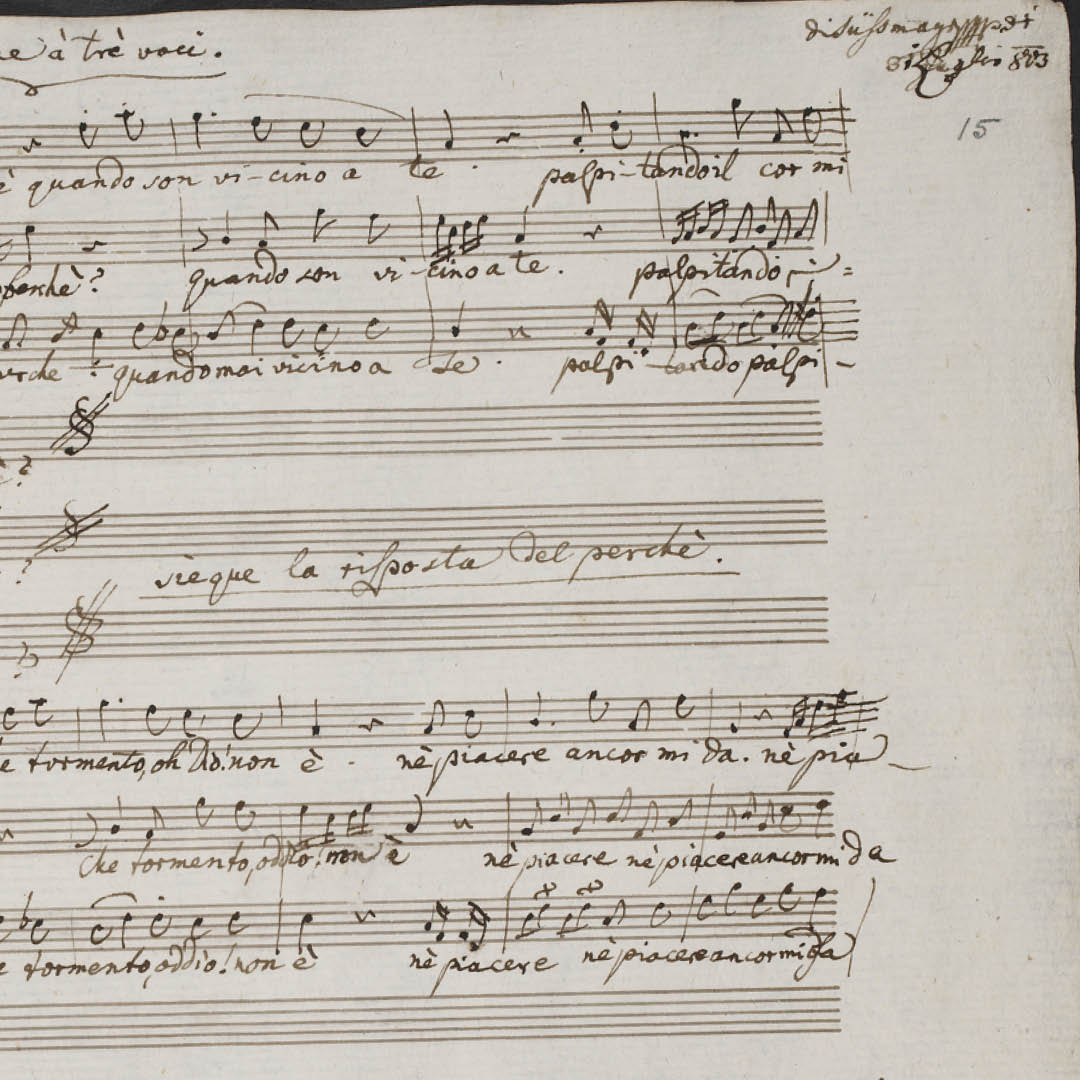
Franz Xaver Süssmayr was an Austrian composer and conductor whose name is inseparably linked to one of the most enduring works in Western music: Mozart’s Requiem. A respected musician in his own right during his lifetime, Süssmayr played a pivotal role in preserving Mozart’s final masterpiece, completing the work in a form that continues to be performed around the world today.
Born in Schwanenstadt, Austria, Süssmayr received his earliest musical training from his father before continuing his studies at the Benedictine monastery school in Kremsmünster, where he developed as a singer, instrumentalist, and composer. His talents led him to Vienna in 1788, where he studied with Antonio Salieri and soon entered Mozart’s inner circle, assisting as a copyist on works including La clemenza di Tito and Die Zauberflöte. Their close professional relationship positioned Süssmayr to understand Mozart’s musical intentions in his final months.
After Mozart’s death in 1791, his widow, Constanze Mozart, entrusted Süssmayr with completing the unfinished Requiem, drawing on their prior discussions and Mozart’s surviving sketches. Süssmayr orchestrated existing movements and composed the Sanctus, Benedictus, and Agnus Dei, shaping the version most familiar to audiences today. Beyond the Requiem, he enjoyed considerable success as a composer of operas, Singspiele, and sacred music, and served as Kapellmeister at Vienna’s Kärntnertortheater. His promising career was cut short by tuberculosis, and he died in 1803 at just 37—leaving behind a legacy defined not only by proximity to genius, but by craftsmanship, musical insight, and historical consequence.